
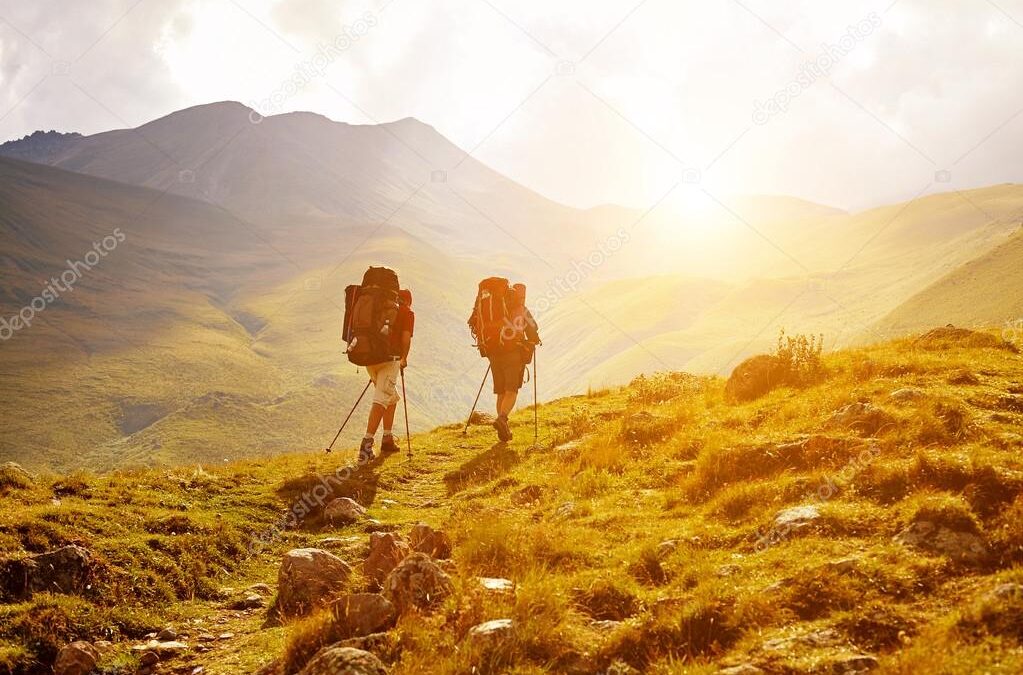
Part 1: Our Bodies, Training and Diet
Problem:
Being outside in a climate that our bodies cannot handle alone without the help of clothing and an understanding of therm o-regulation.
Preface:
Most of my outdoor time has been spent in the swamps of North central MN as well as the rocky mountains in western United States hunting big game and birds.
Series Purpose:
Understand our bodies, To assess against your full clothing system and put your understanding against your real world expectations and results for all scenarios. Knowing many of these things are already understood they are still outlined as a larger picture discussion.
Index:
|Part 1: Our Bodies, Training and Diet
|Part 1.1 The Climates We Recreate In
|Part 2: Material Data
|2A: Wool
|2B: Membranes
|2.1: Caring For Your Gear
|Part 3: General theory of application of material in purpose| I don’t have a link for this.
Topics:
- Our bodies and how they work to heat and cool
- Nutrition and Hydration
- Explain as simply as possible the moisture in your micro-climate and what it means to comfort and survival and how those two things can relate
- Application of drills, readiness, and preparedness
- Material science and their application in a kit
- How to train and test your gear for the variables that you will encounter in an extended no support situation\Materials and how to apply them in your kit to best work for you at the appropriate position
Future expansion on this part:
1. Deep dive into specific trainings for desired results for particular activities
2. Deep dive into specific food planning for extended outings
3. Deep dive into human anatomy with a focus on application in outdoor pursuits
Author comments:
I am more rock and stick than plan and prep, but details are needed for this conversation.
I am not super technical nor do I understand these things down to a science. But I have been out, screwed up and been in dangerous situations, all before I had any clue on high end technical clothing and how to really apply it.
Most dangerous/miserable situations can be avoided with knowledge, and wisdom. In this context these are typically gained through experience and practice but intelligence is related directly with being wise. So gaining intellectual wisdom through reading will decrease the learning curve dramatically.
Our bodies:
The main functions our bodies use for thermoregulation:
- Sweating- glands secreting water and minerals to allow for higher evaporative heat loss.
- Vasodilatation: when we warm up the vessels under our skin get wider moving the hotter blood to the surface to cool. This increases convective, and conductive heat loss. [https://pubmed.ncbi.nlm.nih.gov/18568361/].
- Vasoconstriction: the adverse to vasodilation to decrease convective and conductive heat loss. [https://pubmed.ncbi.nlm.nih.gov/31045297/]’
- Thermogenesis: shivering, your body is at a point where it needs to start generation of additional heat on its own.
- Hormonal thermogenesis: raising or lowering your metabolism to generate more or less heat. (Being outside our operating temp costs calories)
The external temp at which your body does not expend any energy for thermoregulation is about 84° F, so in respect to a general understanding of our bodies in an ideal situation your microclimate being at this temp is ideal.
Takeaways:
When the blood vessels next to skin dilate in reaction to aerobic exercise it does so in tandem with increased sweating.
When the temp next to skin drops and your skin gets cold the vessels restrict and the vessels deeper dilate to help increase blood flow to help keep your blood flow high and regulate you temp.
Training:
Practices that can change your body to better deal with climate.
The broad term that seems to be used is Acclimatization: you know when winter hits and you need a big coat but then when spring arrives you don’t at the same temperature… that’s what this is…”the process or result of becoming accustomed to a new climate or to new conditions. “
One practice I’ve adopted is in reaction to one of Wim Hofs statements. “For most of our evolutionary history, a merciless natural environment did this for us, sub-zero temperatures, howling winds, and hungry wolves kept our muscles and veins supple and our minds Sharp.”
Thinking about this and how I am a very sweaty person having that being a challenge for me when out extended I started to do things daily to help my body adapt to dramatic changes in temps.
I sorted out what I needed to wear for casual wear to be warm and comfy doing minimal activity in 50-60°f and began wearing that much indoors at 65-75°. Over time I was able to be comfortable at the higher temps without sweating. Also as it cools off I’ll wear the same and go out of the house for errands or otherwise in temps down into the 20’s and 30’s. Sure it’s cold, but I have minimal to zero risk. This has impacted my tolerance during activity greatly as well as being able to wear a similar kit for a extended trip with much less donning and doffing.
Breathing practice:
Most notable for cold weather is probably the Wim Hof method.
[https://evolvingminds.org.uk/breathing-to-reduce-stress-and-for-good-health-the-wim-hof-method/]
In a nutshell you train your body for better oxygen absorption and doing so in a cold therapy method.
Other breathing trainings can be during high output aerobic activity as well.
You can do many different things in changing your breathing practices for aerobic activity.
You can buy items to restrict your o2 intake.
[https://www.trainingmask.com/]
Ultimately with self control you can do the same by speeding up the rate at which you inhale and exhale and shortening the inhale amount.
Reducing your o2 intake isn’t the equivalent of training at altitude where the oxygen is “thinner”
Barometric pressure and air compression is something that is complex to explain in a technical fashion in a way that will help.
Here is a decent link if you want to read the technical bits.
The ratio of 78/21 hydrogen to oxygen is the same, but there is less of it up high.
Imagine mixing gas for a chainsaw/snowblower/small engine. You mix it at a % of each item in relation to each other. If you have 5 gallons of gas you’ll need more oil than 2 gallons, there is more of all of it at lower altitude…. Ya feel me?
Sauna altitude training:
“Consider using the sauna if your race is higher up in elevation than where you live and train. Some research indicates that dry sauna use can help performance at sea level too. The general protocol is 20-30 minutes in a dry sauna sometime after runs.”
[https://trailrunnermag.com/training/trail-tips/training-for-mountain-running-from-sea-level.html]
Brief Personal Note: I have found the best results to be less cardio, the big 3 drop weight training followed immediately by HIIT cardio and then followed very quickly by sauna calisthenics. This seems to get my oxygen absorption to increase at the best rate.
Hyperbaric chamber: ( not for the light of pocket book)
Hypobaric chamber:( much less common in the athlete space.)
General Diet: focused on bacterial odor in clothing.
Preface: What we eat changes how much we smell when we sweat, being that this series is meant to be around us and our clothing system I’m going to try to stick to what makes us stink! along with some low level Macro information around daily needs. Keep in mind that many foods that make us smell bad are good for us! But there are a few things that help reduce odor and are great for you too!
Speaking generally, higher carbohydrates and lower fat foods will lower body odor. That along with minerals and micro-nutrients can have a large impact.
Two main contributors that will help lower body-odor
- Chlorophyll: higher chlorophyll foods like kale and spinach have properties that help neutralize other odor causing things you ate or have in your system. [https://lpi.oregonstate.edu/mic/dietary-factors/phytochemicals/chlorophyll-chlorophyllin] [https://healthfully.com/150423-chlorophyll-underarm-odor.html]
- Fiber: We all know about Fiber methinks. Fiber stabilizes your digestion and makes sure everything is flowing, adding it often times speeds it up if you are deficient, this will get the foods out of your system as waste quicker so that those associated odors don’t come out as sweat.
Primary Items that will make odor worse:
- Alcohol 🙁
- Sulfur
- Meat
One thing that is often overlooked in this aspect is sulfur. Foods high in sulfur will make you stink… think that “amazing” smell of steamed broccoli!.
Now, we need sulfur for proper health so this is a funny balance of what to and not to eat to help reduce odor.
Some foods that are rich in sulfur that most greatly impact odor are. (Again these things are very good for your health they just make you stink)
[https://www.webmd.com/diet/foods-high-in-sulfur]
- Garlic
- Leeks
- Onions
- Scallions
- Shallots
Sticking to things like these will keep your sulfur intake going good and reduce over all odor.
- Nuts
- Seeds
- Whole Grains
- Leafy green veggies
- Legumes
Meat: all meat makes you stink but the biggest offender is red meat, all my favorites! 🙁
- Beef
- Lamb
- Pork
- Venison ( I can argue this)
- Goat (can also argue this)
Will get to the deets on how wild game changes things.. hint: it’s really low in fat!
Red meat in your system affects your body odor greatly, something to do with the amino acids and the bacteria on your skin. Read a bit of the details on it, but real life try not eating it for a few weeks and it’s fairly noticeable.
Going down a bit of a rabbit hole here that many may not be able to take advantage of but is relative to the discussion.
Wild game vs farmed meat:
Talking the 9/4/4 fat/protein/carbs caloric density it gets more apparent as to the stink factor with what we know about animal fats and odor.. not to mention overall health.
All of those shows like “Forks over knives” and books like “Food: what the heck should I eat” are all fine and dandy but they don’t really talk about the real details and are shills to either whomever paid them the most or to themselves for gain based on their knowledge and understanding.
Wild game animals’ fat content ranges from about 0.9 Grouse to 4 % in duck/waterfowl. Domestic farm animals have around 25 to 30% fat.
Just a few bits of info on wild and farmed meat
Approx Per 100 grams
|Animal|Fat|Carbs|Protein|Source|
|:-|:-|:-|:-|:-|
|Grouse|.9|0|24|Wild|
|Duck|4.3|0|23|Wild|
|Turkey|1.1|0|26|Wild|
|Pheasant|9|0|27|wild|
|Moose|1.5|0|22|Wild|
|elk|1.5|0|23|Wild|
|Venison|2.7|0|22|Wild|
|Game bison|1.8|0|22|Wild|
|Bear|3.1|0|26|Wild|
|Bighorn sheep|9|0|27|wild|
|Turkey|7.7|0|20|Farmed|
|Chicken|8.1|0|17|Farmed|
|Grassfed beef|13|0|19|Farmed|
|Lean pork chops|4.6|0|29|Farmed|
Upland Birds namely can vary quite greatly if they live near a corn field vs lowland or grassland
There are so many other variables for “healthy” (saturated vs unsaturated, etc) but this is intended to be a quick look at questioning what we eat for odor.
Side note:
Wild game meat is much higher in many of the micro-nutrients we need because wild animals eat natural vegetation as opposed to commercial grains. These things also contribute to lower odor. Namely B-Vitamin percentages are nearly triple.
Easy to use site to find general food information!
Sources of Wild Game Macros
Food in the field
Pretty good video on Back-country nutrition
[https://youtu.be/iqgayipoNWA](https://youtu.be/iqgayipoNWA)
Looking at Base RMR can give you a really good idea on the amount of calories that you need per day to keep your body both nourished as well as warm in the cold or cool in the warm.
There are quite a few RMR Calculators out there, this one is simple and straight forward. I find that if you get to complex especially if you dont know all of the data required it can give you more of a false number than if you just KISS and then adjust with experience on your intake to expenditure.
[https://globalrph.com/medcalcs/resting-metabolic-rate-rmr/]
Once you have a good Handle on your RMR you can appropriately plan in macro nutrients to get the desired results.
With the caloric density of 9/4/4 Fat/Carbs/Protein is is apparent that Fats will provide the best energy density on while on the trail. We will not get into the affects of carbs vs fat on your body along with Ketosis in this series for it is mostly outside the scope.
Calculation Examples:
Determine the number of calories from fat, carbs, or protein:
Grams of carbs, fat, or protein x the # of calories per gram of carbs, fat, or protein.
Ex: total fat = 3 grams, carbs = 32 g, pro = 3 g (all given on the food label below)
3 grams of fat x 9 calories per gram of fat = 27 calories from fat.
32 grams of carbs x 4 calories per gram of carbs = 128 calories from carbs
3 grams of protein, x 4 calories per gram of pro = 12 calories from protein.
Total calories per serving:
27 calories from fat
128 calories from carbs
12 calories from protein
167 total calories per serving of cereal (may be a few calories off from the actual food label due to rounding.)
Total calories per container:
Total calories per serving x the total servings per container. Example from below: 167 total calories x 5 servings per container = 835 calories per container
To determine the percentage of calories from carbs, fat, protein etc:
grams fat, carbs or protein per serving x calories per gram of fat, carbs or pro) divided by the total calories per serving. Then move the decimal or multiply by 100 to get a percentage.
This = percent calories from fat, carbs or protein per serving.
Example: Cereal Box
|Calories per serving|167|
|:-|:-|
|Servings per container|5|
|Total fat|3 grams|
|Total saturated fat|1 gram|
|Cholesterol|0 mg|
|Sodium|250 mg|
|Total carbs|32 grams|
|Dietary fiber|4 grams|
|Sugars|11 grams|
|Protein|3 grams|
% of calories from fat: ( 3 g fat x 9 cal per gram fat ) / 167 cal x ( 100 ) = 16%
% of calories from protein: ( 3 g pro x 4 cal per gram pro ) / 167cal x ( 100 ) = 7%
% of calories from carbs: ( 32 g carbs x 4 cal per gram carbs ) / 167 cal x ( 100 ) = 77% = 100% (must equal about 100%)
To determine # of calories from sugar and the % of calories from sugar:
(11g sugar x 4 cal per gram sugar) = 44 cal from sugar (44 cal sugar / 167 cal.) X 100 = 26 % calories from sugar per serving
To determine # grams fat, carbs, or protein want per day: (To determine Daily Values) (# of calories eat per day x the percentage of carbs, protein, or fat want per day) divided by (/) # calories per gram of fat, carbs, or pro.
Examples:
Determine # grams fat want per day: (2,000 calories per day x .30 percent calories from fat per day) / 9 calories per gram of fat = 66 grams of fat per day. (See D.V. on a food label)
(2,500 calories/day x .30 percent cal from fat/day) / 9 calories per gram of fat = 83 grams of fat per day. (See D.V. on a food label)
(2,000 calories/day x .15 percent cal from fat) / 9 calories per gram of fat = 33 grams of fat per day.
Determine # grams carbs want per day:
(1,500 calories/day x .70 % carbs/day) / 4 cal per gram carbs = 262.5 g carbs per day
(2,000 calories x .60 % carbs) / 4 cal per gram carbs = 300 grams carbs per day (See D.V.)
Determine # grams pro want per day
(1800 calories x .15 % protein) / 4 cal per gram pro = 67.5 g protein need each day
Takeaways:
If you live a wholistic dietary lifestyle in general is a good start for health and body odor.
If you have the means to grow as much of your own food and harvest wild game you can help your health and reduce odor.
Additional discussion thoughts:
- Any training techniques to help with altitude or otherwise?
- Any dietary considerations around caloric density, both before and during an extended outing?
- Personal understanding and examples of how your body reacts to dynamic climate.
- In the cooler months do you keep the start cold mentally? If not why?
- How do you adjust your layering NTS from warm to cold to keep/help your body do it’s job?
NOLS Training link
https://www.nols.edu/en/courses/
Edit: actively editing for more content in areas as well as formatting for better readability.
Video Post Mock
"Sed ut perspiciatis unde omnis iste natus error sit voluptatem accusantium doloremque laudantium, totam rem aperiam, eaque ipsa quae ab illo inventore veritatis et quasi architecto beatae vitae dicta sunt explicabo. Nemo enim ipsam voluptatem quia voluptas sit...
Mock Post 3
"Lorem ipsum dolor sit amet, consectetur adipiscing elit, sed do eiusmod tempor incididunt ut labore et dolore magna aliqua. Ut enim ad minim veniam, quis nostrud exercitation ullamco laboris nisi ut aliquip ex ea commodo consequat. Duis aute irure dolor in...
Mock Post 2
"Lorem ipsum dolor sit amet, consectetur adipiscing elit, sed do eiusmod tempor incididunt ut labore et dolore magna aliqua. Ut enim ad minim veniam, quis nostrud exercitation ullamco laboris nisi ut aliquip ex ea commodo consequat. Duis aute irure dolor in...

Rock Solid Gear Program
- Access to our latest gear designed for extreme conditions.
- Opportunities to provide feedback and collaborate on product development.
- Exclusive offers and early access to new releases.
- A platform to share your experiences and stories with the Tag Outdoor Gear community.